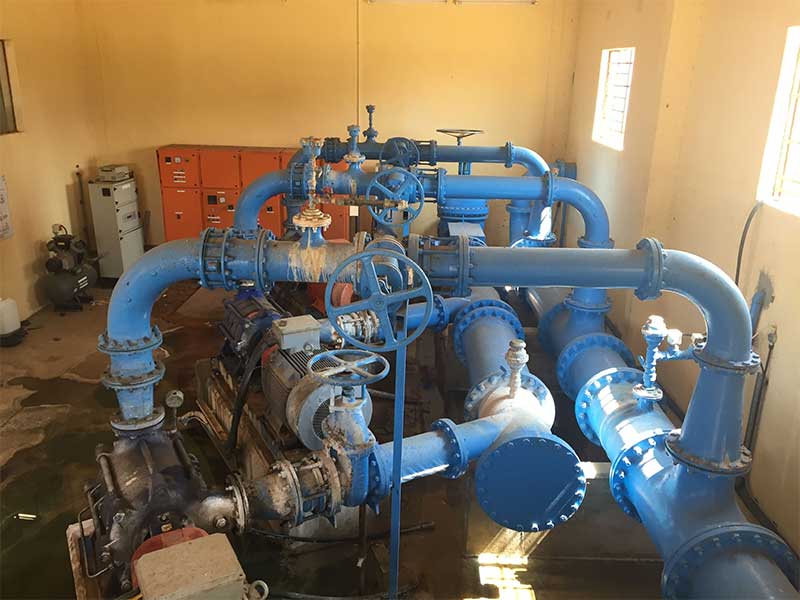
Water Audits – Water Utility Technical and Commercial Assessments and Preliminary System diagnosis
Non-revenue water (NRW) continues to be the most significant problem for water utilities in developing countries. Millions of litres of expensively treated water are lost in an era when climate change, rapid urbanization, and industrial growth are creating water scarcities situation. Cape Town’s recent drought exposed a water crisis that was mainly based on water utility operational weaknesses and NRW high-levels.
For many utilities a major challenge is to define where the NRW is occurring (Physical losses, Commercial losses or Unbilled authorised consumption) and then to address ways of reducing them. In order to define NRW levels, a Water Audit is of fundamental importance, which will provide the level of water losses. A Water Balance, which is an International term, will provide the results of a Water Audit, which is a North American term. The International Water Association (IWA) Water Balance is the most worldwide accepted water audit tool to define NRW levels in water supply systems.
In addition, Water Utility Technical and Commercial assessment will provide more in-depth information and reasons for utility performance levels.
A certain level of leakage is inevitable, even for the best-maintained and operated water distribution network. And so, a water utility should determine the two characteristics of their system to implement a successful and sustainable water loss reduction programme: the current leakage status and the ideal economic level of leakage. These two features are almost unique for every system, and so needs to be determine specifically for the water utility.
The current water losses level must be understood and assessed using a diagnostic approach before an appropriate water loss reduction strategy can be developed.
Some basic questions and tools can effectively guide this diagnostic:
Do we know our system? Do we have enough and accurate system maps, GIS, as built drawings, etc.? There is need to improve / update this information?
How much water is supplied? How much water is sold? How much water is lost? Can we produce a IWA Water Balance?
Where is the water lost? Do we have enough and accurate measuring devises (bulk and customer meters)? Are we properly monitoring our systems?
Where is the water lost? Do we have enough and accurate measuring devises (bulk and customer meters)? Are we properly monitoring our systems?
Why is the water lost? Are good practices being implemented?