
NRW Reduction Strategies & Master Plans
Once that there is knowledge of the amount of water that is being lost, the water utility should determine what needs to be done and when. A NRW reduction strategic plan sets the baseline, investigate and analyse different options for interventions, propose medium and long-term targets and determines costs and impacts of the NRW water interventions. Water utilities should always first set their sights on components of non-revenue water where investments will generate the highest rate of return. Therefore, it is important to compare the components of non-revenue water not only by their volumes, but also by their financial impacts.
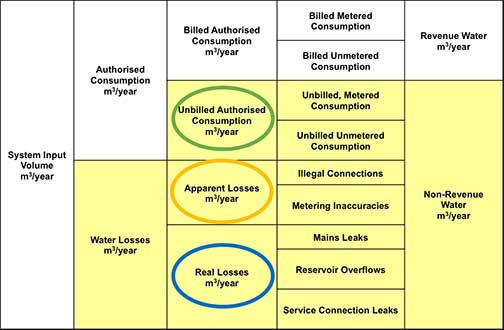
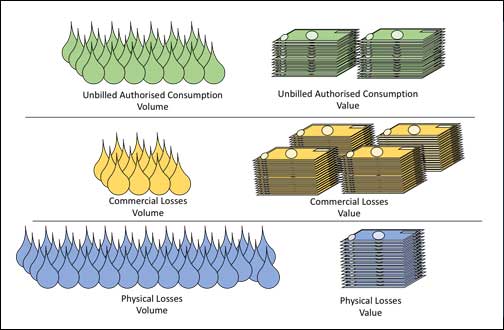
NRW components should not only be compared by their volumes, but also by their financial impacts.
A fundamental step in NRW reduction and management is to embark in a comprehensive NRW multi-year strategy:
Short-Term Strategy: rip low hanging fruit – this is what we the utility will identify to be implemented first.
Long-Term Strategy: sustain NRW at low economic levels – this needs a deep economic analysis
NRW reduction and management is a major challenge; it needs vision and commitment from management, contributions from many departments and intensive collaboration between employees. Also, the challenge to reduce NRW includes technical, cultural and organizational changes. Usually, quick-wins can be achieved within 2-3 months but sustainable results can only be achieved after several years of efforts, when structural changes are implemented.
